Hurricane Days: What They Don't Tell You in Teacher Prep Programs
Last September, I was standing in my empty classroom at 6 PM on a Sunday, taping up windows and wondering why nobody ever taught me hurricane protocol in my education classes. Twenty-two years in, and I'm still learning new things about this job. But after living through more storms than I care to count, I've figured out what actually works when Mother Nature decides to shake things up.
Let's be honest, fellow Florida teachers. Hurricane season isn't just about the weather. It's about managing anxiety (yours and theirs), catching up on lost instructional time, and somehow keeping your sanity when your carefully planned curriculum gets tossed around like a palm tree in 75 mph winds.
Before the Storm: More Than Just Moving Computers
Start with Your Classroom
I learned this the hard way during Hurricane Charley. Don't just think about the obvious stuff like electronics and bulletin boards. Those beautiful anchor charts you spent hours making? They need to come down too. Water finds its way into the strangest places.
Here's my hurricane prep checklist that actually works:
Take photos of everything first. Your bulletin boards, your classroom setup, even inside your desk drawers. Trust me on this one. After Hurricane Ian, I couldn't remember where half my supplies were supposed to go.
Move everything off the floor. I mean everything. That includes the reading corner pillows, the math manipulatives bin, and yes, even that heavy class library shelf. Water doesn't care how much your back hurts.
Prep Your Students (The Part That Really Matters)
The real preparation isn't about your classroom. It's about your kids. At my Title I school, some families don't have hurricane supplies, evacuation plans, or sometimes even a safe place to ride out the storm.
Two weeks before hurricane season starts, I begin weaving weather safety into our science lessons. We talk about emergency kits, family communication plans, and what to do if you get separated from your family. I make it educational, not scary.
I also send home a simple hurricane checklist in English and Spanish. Not the fancy emergency management one with 47 items, but a realistic list for families who might be living paycheck to paycheck.
During the Storm: Stay Connected (But Set Boundaries)
Here's something they don't tell you: your students are going to be scared, and their parents are going to reach out to you. A lot.
I've learned to use our class communication app to send one update per day during the storm. Something simple like "Thinking of all our classroom families today. Stay safe and we'll see each other soon." It helps the kids feel connected without overwhelming anyone.
But mija, you also need to take care of yourself. Turn off the school notifications after 8 PM. The emergency isn't going to be solved by you answering parent emails at midnight while the wind is howling outside.
The Real Challenge: Coming Back
This is where it gets tricky. Some kids will bounce back like nothing happened. Others will be dealing with trauma, displacement, or family stress that shows up as behavior issues or inability to focus.
First Day Back Protocol
Forget your lesson plans for the first day. Just forget them.
Instead, start with a circle time. Let kids share what they want to share about their hurricane experience. Don't force it, but create the space. You'll learn more about your students in that 30 minutes than you would in a week of regular instruction.
I always have extra snacks that first day back. Some families might still be without power or dealing with food spoilage. A hungry kid can't learn, and sometimes a granola bar is the bridge back to normalcy.
Catching Up Without Losing Your Mind
Ay, dios mío, the pressure to catch up on lost instructional time. I get it. The FAST test doesn't care that we missed a week of school because of Hurricane Nicole.
But here's what I've learned: rushing through content to "catch up" just creates bigger gaps later. Instead, I look at what's truly essential and what can be integrated into other subjects.
That weather unit we missed in science? Perfect time to incorporate data analysis and graphing from our math standards. Reading comprehension struggling after the break? Use age-appropriate articles about hurricane preparedness and recovery.
Supporting Families in Crisis
This is the part that breaks your heart and makes you proud to be a teacher at the same time.
Keep a list of community resources handy. Food banks, clothing donations, temporary housing assistance. Some families will be too proud to ask directly, but they'll take a flyer that you "just happened to have extra of."
Partner with your school counselor and social worker. They're going to be swamped, and an extra pair of eyes in the classroom can help identify kids who need additional support.
The Long Game: Building Resilience
Hurricane recovery isn't a sprint. Some kids will be dealing with the effects for months. That family that's been displaced and is now living with relatives? That child might be struggling with math not because they missed a week of school, but because they're sleeping on a couch and don't have a quiet place to do homework.
Build flexibility into your classroom routines. Maybe homework looks different for a while. Maybe you need more brain breaks or movement activities because kids are still processing stress.
Taking Care of Yourself Too
Carlos always jokes that I worry more about my students during hurricane season than I do about our own house. He's not wrong, pero that's who we are as teachers.
But you can't pour from an empty cup. Make sure your own family is prepared. Have your own emergency kit, your own plan, your own support system.
And when you're standing in your classroom after the storm, looking at the mess and wondering how you're going to get everything back to normal, remember this: normal was never the goal anyway. We're building resilient, caring, capable humans. Sometimes that happens in spite of our lesson plans, not because of them.
Moving Forward Together
Every hurricane season, I'm reminded why I love teaching in Florida despite the challenges. Yes, we deal with storms that other states don't. But we also get to model resilience, community support, and adaptability for our students in real, meaningful ways.
Your hurricane preparedness might look different than mine depending on your school, your community, and your students' needs. That's okay. The important thing is that we're thinking beyond just protecting our classroom supplies. We're protecting and nurturing the whole child, before, during, and after the storm.
Stay safe out there, and remember: we've weathered storms before, and we'll weather them again. Together.
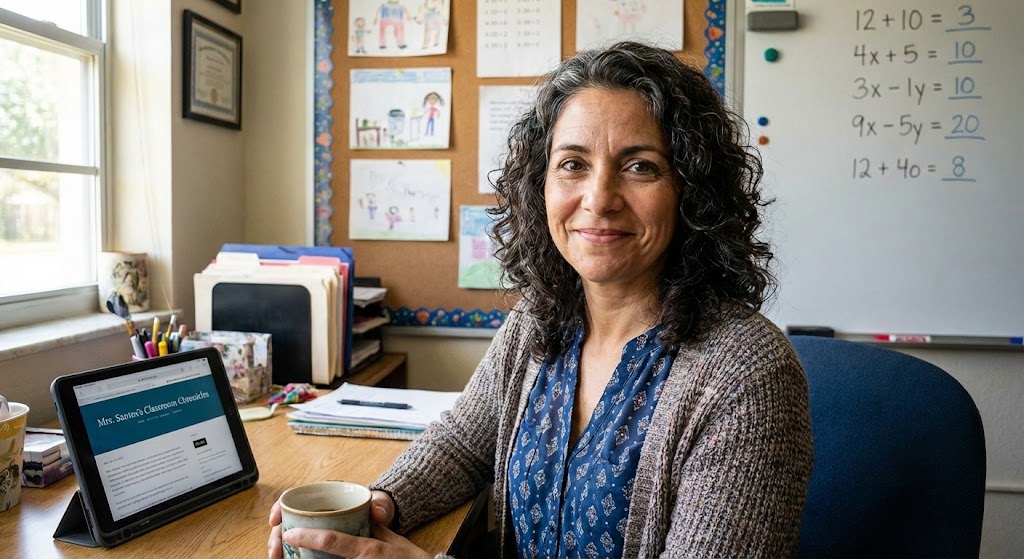
Maria Santos
Maria has been teaching 4th grade in Tampa, Florida for 22 years. Known as "the math whisperer" among her colleagues, she writes about the real challenges and victories of teaching in Florida's public schools.
When she's not grading papers or creating lesson plans, you can find Maria at her local teacher supply store (with coupons in hand) or sharing teaching tips over cafecito with her teacher friends.
View Full Profile →Related Articles
What I Wish I Knew About FAST Testing (Before I Learned the Hard Way)
Florida teacher tip: Let me paint you a picture. It's March 2019, my first year with FAST testing, a...
When Your Classroom Feels Like the Surface of Venus: Surviving Florida's Heat Without Losing Your Mind
Florida teacher tip: It was 8:47 AM on a Tuesday in September when I realized my classroom thermomet...
Ready to Improve Your FAST Scores?
Upload your class data and get personalized IXL success plans in seconds.
Try It Free